

Cap and Hair Loss: Myth or Reality?
Does wearing a cap cause hair loss? BLACKBOX separates fact from fiction between genetics and traction alopecia. Adopt the right care practices.
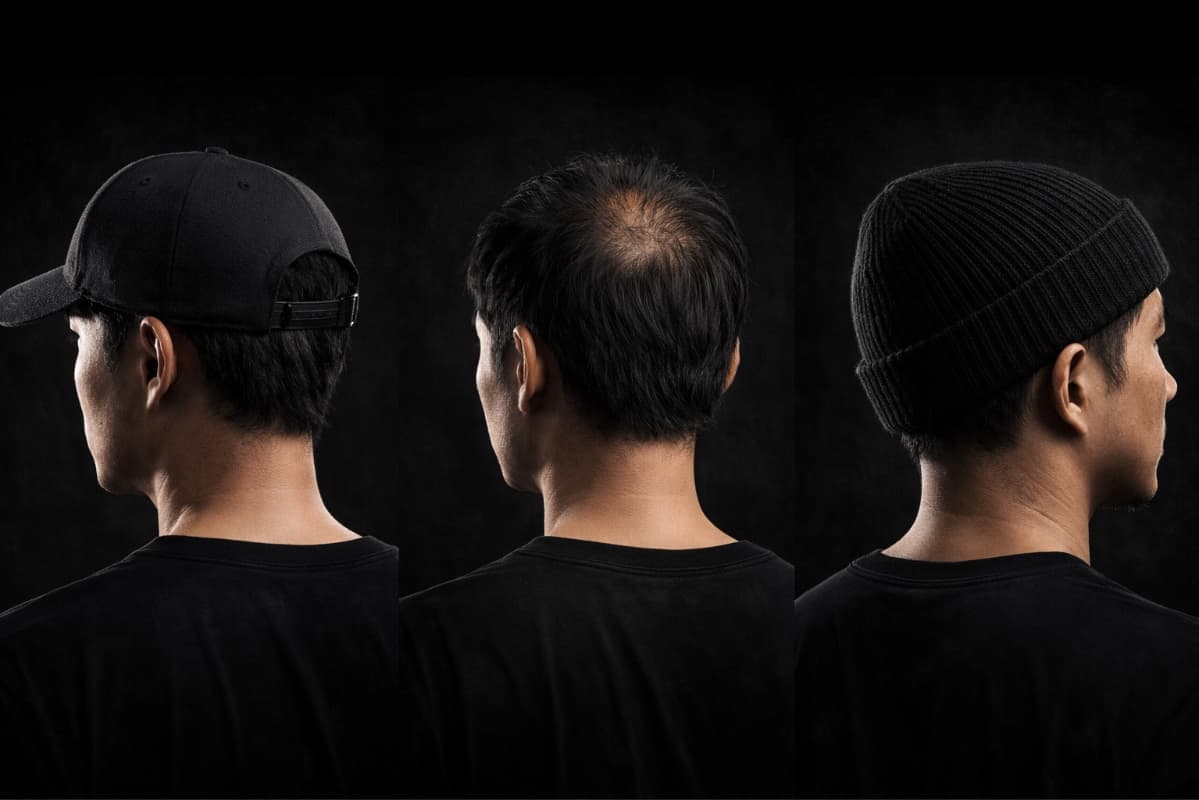
Cap and Hair Loss: Myth or Reality?
It's a question that comes up often in our chairs: does wearing a cap or beanie accelerate baldness? In a world where style and performance are inseparable, it's time to separate urban legends from biological reality. At BLACKBOX, we analyze the facts to give you straightforward answers.
The Verdict: The Cap Does Not Cause Hair Loss
Let's be direct: No, wearing a cap does not cause hair loss. Baldness (androgenetic alopecia) is primarily a matter of genetics and hormones. According to the American Academy of Dermatology, we naturally lose between 50 and 100 hairs per day. If you find them in your cap, it's simply because they were trapped there at the moment of their natural shedding, not because they were "pulled out".
Beware of "Traction Alopecia"
If the cap itself is harmless, the way you wear it can become a risk factor. A head covering that is too tight for prolonged periods can cause traction alopecia. This constant mechanical tension eventually damages the hair follicle. If you have a mark on your forehead when removing your accessory, it's a sign of excessive compression that weakens your hairline.
Cap vs Beanie
Whether it's a cap or a beanie, the impact varies depending on the material. While hair draws its oxygen from blood and not from air, an accessory that "suffocates" the scalp promotes perspiration and bacterial growth. Wool, more abrasive than cotton, can also create micro-cracks on the cuticle, making hair dull and brittle.
The BLACKBOX Strategy: The Recovery Routine
For us, style should never compromise health. Your head covering is a signature, but it requires a rigorous care discipline:
- Circulatory Reactivation: As soon as you remove it, firmly massage your scalp to restart the micro-circulation compressed throughout the day.
- Operational Hygiene: Wash your accessories regularly. A healthy scalp begins with a clean cap, free of sebum and bacteria.
- Hair Shield: Use purifying but gentle treatments to cleanse the ecosystem without stripping it, and favor dry oils to protect the fiber from mechanical friction.
Conclusion
Wearing a cap does nothing to alter your genetic makeup. The important thing is not what you put on your head, but the discipline with which you maintain what lies beneath. At BLACKBOX, we're here to structure your style and monitor the health of your hair infrastructure at every step.